
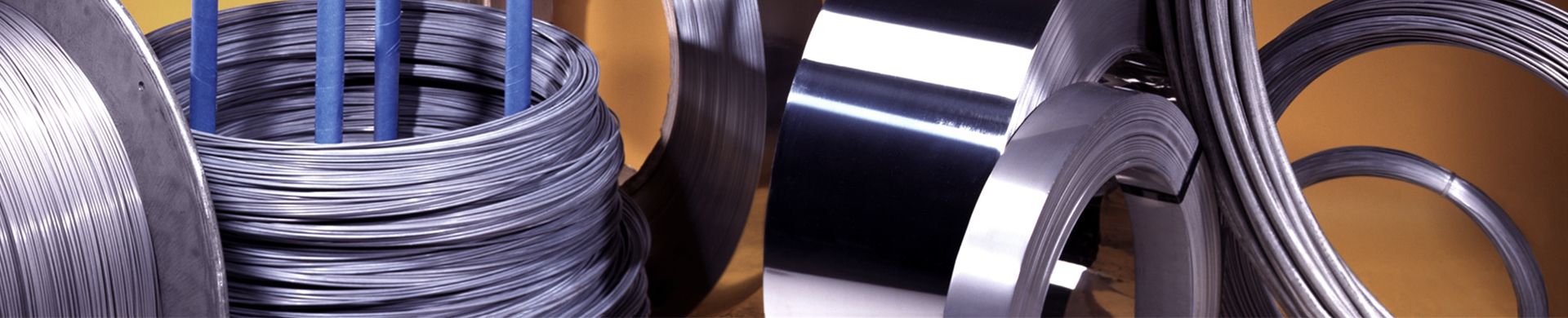



Heating elements—critical for devices like electric stoves, industrial heaters, and medical equipment—consist of four core components working in synergy to generate and transfer heat efficiently. Each part plays a vital role in ensuring stability, safety, and performance, with the alloy heating core being the most decisive element (directly determining heat output, temperature resistance, and lifespan). Our heating elements leverage premium nickel-chromium (Ni-Cr), iron-chromium-aluminum (Fe-Cr-Al), and copper-nickel (Cu-Ni) alloys as the heating core, paired with high-quality auxiliary components to deliver reliable performance across diverse applications.
Complete Component Breakdown of Heating Elements
| Component Category | Key Functions | Common Materials |
| Core Heating Alloy | Converts electrical energy to heat via resistance; determines temperature range | Nickel-Chromium (Ni80Cr20), Fe-Cr-Al (Cr20Al5), Copper-Nickel (Cu55Ni45) |
| Insulation & Protection | Prevents short circuits; withstands high temperatures; isolates heat transfer | Ceramic beads, mica sheets, glass fiber, stainless steel sheath |
| Structural Support | Fixes the heating core; maintains shape under thermal expansion | High-temperature resistant steel brackets, ceramic holders |
| Electrical Connections | Transmits current to the heating core; ensures stable contact | Silver-plated copper terminals, stainless steel bayonet connectors |
Our Core Alloy Heating Materials: Ni-Cr, Fe-Cr-Al, Cu-Ni
The core heating alloy is the “heart” of any heating element. Below are the key features, advantages, and applications of our three flagship alloy materials—engineered to meet diverse temperature and performance requirements:
| Alloy Type | Composition & Key Metrics | Core Advantages | Target Applications |
| Nickel-Chromium (Ni-Cr) | Ni80Cr20/Ni60Cr15; Resistance: 1.0–1.5Ω·mm²/m; Max Temp: 1200°C (continuous) | Excellent oxidation resistance; low resistance drift (±1% after 5000h); uniform heat distribution; long service life (≥8000h) | Industrial high-temperature furnaces, electric stove heating elements, 3D printer hotends, aerospace heating systems |
| Iron-Chromium-Aluminum (Fe-Cr-Al) | Cr20Al5/Cr18Al2; Resistance: 1.2–1.6Ω·mm²/m; Max Temp: 1400°C (continuous) | Ultra-high temperature resistance; cost-effective; lightweight; good mechanical strength; corrosion-resistant to industrial gases | Commercial kitchen equipment (ovens, grills), industrial pipeline heaters, household heaters, laboratory heating devices |
| Copper-Nickel (Cu-Ni) | Cu55Ni45 (Constantan); Resistance: 0.45Ω·mm²/m; Max Temp: 500°C (continuous) | Ultra-low temperature coefficient of resistance (TCR: ±20ppm/°C); extreme stability; precise heat control; non-magnetic | Precision temperature sensors, medical equipment (dental curing lights), low-temperature heating elements, current shunts for heating control systems |
Why Choose Our Alloy-Based Heating Elements?
Premium Alloy Quality: All alloys are vacuum-melted with strict impurity control ( ensuring consistent resistance and heat output across batches.
Tailored Performance: Select Ni-Cr for high stability, Fe-Cr-Al for extreme temperatures, or Cu-Ni for precision control—covering 500°C–1400°C operating ranges.
Integrated Component Synergy: Our heating elements combine these core alloys with high-grade insulation and connectors, reducing energy loss by 12% compared to generic products.
Safety & Compliance: Certified by UL, IEC, and GB standards; all components undergo 1000-hour high-temperature aging tests and insulation breakdown tests.
Customizaton Flexibility: We offer alloy wire/ribbon in diameters 0.05mm–5.0mm, and customized heating element assemblies (with matching insulation and connectors) for specific device models.
Application Scenarios Across Industries
Our alloy-based heating elements serve diverse sectors:
Household Appliances: Electric stoves, hair dryers, electric blankets, and built-in ovens.
Industril Manufacturing: High-temperature furnaces, plastic molding machines, and pipeline anti-freezing heaters.
Medical & Laboratory: Diagnostic equipment heating elements, incubators, and precision temperature-controlled tools.
Aerospace & Automotive: Aircraft cabin heaters, electric vehicle battery warmers, and engine temperature sensors.

Post time: Jan-30-2026


