





Choosing the Right Heating Wire: The Key to Heater Lifespan, Energy Efficiency and Reliability
1. Heating Wire for Electric Heaters: Core Function and Fundamental Selection Logic
1.1 Heating Wire: The Core of Every Electric Heater
Energy conversion, temperature control and service life of an electric heater all depend fundamentally on the internal heating wire.
Improper wire selection leads not only to rapid power attenuation and inaccurate temperature control, but also premature burnout and even potential equipment safety hazards in severe cases.
1.2 Four Core Selection Criteria
● Operating temperature: Long-term running temperature sets the minimum requirement for the alloy’s temperature resistance grade.
● Operating environment: Whether there are special conditions such as corrosion, humidity, vibration or special atmospheres.
● Temperature control accuracy: Whether high-precision constant temperature is required, and how strict the demand is on temperature coefficient of resistance.
● Cost and lifespan: Balance between upfront procurement cost and long-term replacement & maintenance cost.
2. Six Mainstream Heating Wire Types for Electric Heaters
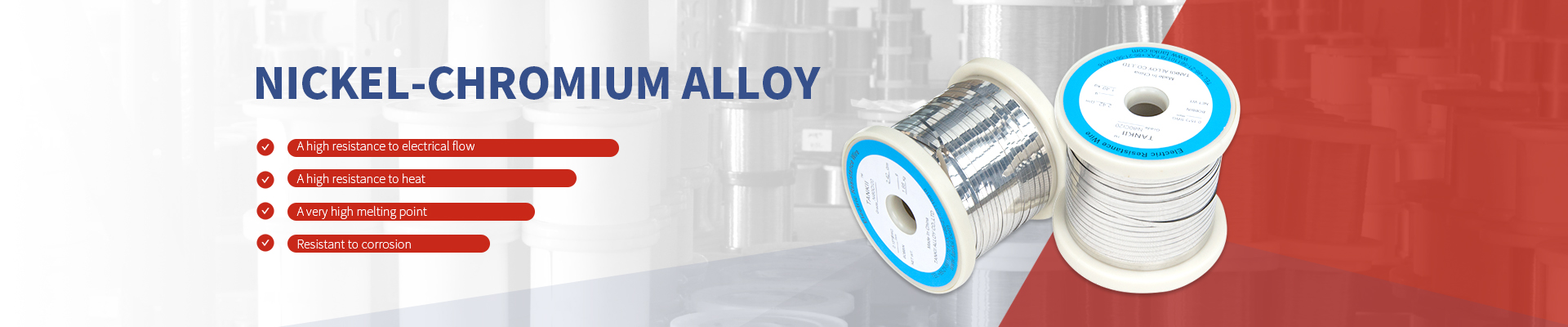
2.1 Nichrome Alloy Wire: The Benchmark for General-Purpose Applications
Typical grades: Ni80Cr20, Ni70Cr30
● Key advantages: Moderate resistivity, low temperature coefficient of resistance, stable heat generation, strong oxidation resistance, good formability and ductility, not prone to breakage
● Long-term operating temperature: Up to 1200°C for Ni80Cr20, up to 1250°C for Ni70Cr30
● Typical applications: Industrial resistance furnaces, ovens, drying cabinets, duct heaters, household small appliance heaters
2.2 FeCrAl Alloy WireFecral Alloy Wire |: Cost-Effective Choice for High Temperatures
Typical grades: 0Cr25Al5, 0Cr21Al6Nb, 0Cr27Al7Mo2
● Key advantages: Higher service temperature, higher resistivity, lower price than nichrome, good energy-saving performance, excellent oxidation resistance
● Long-term operating temperature: 1250°C for standard grades, up to 1400°C for high-end grades
● Typical applications: High-temperature industrial furnaces, annealing furnaces, sintering furnaces, high-power industrial electric heaters
● Note: Higher brittleness at room temperature; bending and installation require proper process control.
2.3 Copper-Nickel Alloy WireCopper-nickel Alloy Wire | (Constantan / Manganin): Ideal for Precision Temperature Control
Typical grades: CuNi44 (Constantan), 6J12 (Manganin)
● Key advantages: Extremely low temperature coefficient of resistance, highly stable resistance value, superior temperature control accuracy, excellent weldability
● Long-term operating temperature: ≤300°C
● Typical applications: Precision constant-temperature heaters, medical device heaters, instrument temperature control heating, sensor heating elements
2.4 Stainless Steel Heating Wire: For Corrosive Operating Environments
Typical grades: 304, 321, 316L
● Key advantages: Good corrosion resistance, high mechanical strength, good toughness, easy to form, high cleanliness
● Long-term operating temperature: ≤800°C
● Typical applications: Food-grade heaters, medical fluid heaters, heaters for humid environments, pipeline heat tracing
2.5 Pure Nickel Wire: For Low-Temperature High-Reliability Scenarios
Typical grades: Ni200, Ni201
● Key advantages: Excellent ductility, strong corrosion resistance, stable resistance, excellent welding performance
● Long-term operating temperature: ≤600°C
● Typical applications: Low-temperature precision heating, medical device heating, aerospace supporting heaters, heat tracing in special corrosive environments
2.6 Nickel-Iron-Chromium Alloy Wire: Economical Medium-Temperature Solution
Typical grades: Cr20Ni35, Cr15Ni60
● Key advantages: Lower nickel content for better cost, performance sits between pure nichrome and FeCrAl
● Long-term operating temperature: ≤1150°C
● Typical applications: Medium-low temperature industrial heaters, household appliance heating elements, general drying equipment
3. Side-by-Side Performance Comparison of Mainstream Heating Wires
| Wire Type | Typical Grade | Max Long-Term Operating Temp | Resistivity | Temp Control Accuracy | Corrosion Resistance | Cost Level | Primary Applications |
| Nichrome Alloy | Ni80Cr20 | 1200°C | Moderate and stable | Relatively high | Excellent | Mid-to-high end | General industrial heating, home appliances, duct heaters |
| High-Chromium Nichrome | Ni70Cr30 | 1250°C | Higher | High | Outstanding | High-end | Complex-atmosphere high-temperature furnaces, long-life industrial heaters |
| FeCrAl Alloy | 0Cr25Al5 | 1250°C | High | Moderate | Excellent | Mid-range cost-effective | High-temperature industrial furnaces, high-power industrial heaters |
| Copper-Nickel Alloy | CuNi44 | 300°C | Highly precise and stable | Extremely high | Good | Precision grade | Medical, instrumentation, precision constant-temperature heaters |
| Stainless Steel | 316L | 800°C | Relatively low | Moderate | Outstanding | Mid-to-high end | Food/medical fluid heating, corrosive environment heat tracing |
| Pure Nickel WirePure Nickel Wire | | Ni200 | 600°C | Moderate | High | Outstanding | High-end | Precision low-temperature heating, special corrosive environments |
4. Wire Selection Solutions for Different Types of Electric Heaters
4.1 Industrial High-Temperature Electric Heaters
Suitable for resistance furnaces, bogie hearth furnaces, carburizing furnaces, etc.
● Below 1200°C in conventional atmosphere: Prioritize Ni80Cr20 nichrome wire for good stability and easy maintenance.
● 1200–1300°C high temperature / complex atmosphere: Prioritize Ni70Cr30 or high-end FeCrAl wire, balancing temperature resistance and corrosion resistance.
● Budget-sensitive with stable air atmosphere: Choose 0Cr25Al5 FeCrAl wire for outstanding cost performance.
4.2 Residential and Commercial Electric Heaters
Suitable for ovens, dryers, fan heaters, etc.
● Conventional household appliances: Cr15Ni60 or Ni80Cr20, with balanced performance and good processability.
● High-power commercial equipment: Prioritize FeCrAl alloy for higher energy efficiency and longer service life.
● Food-contact applications: 304/316L stainless steel heating tubes, meeting food-grade safety requirements.
4.3 Precision and Medical-Grade Electric Heaters
● High-precision constant temperature demand: Copper-nickel constantan wire with low TCR, delivering temperature control accuracy up to ±0.1°C.
● Human/fluid contact scenarios: 316L stainless steel or encapsulated pure nickel wire, meeting biocompatibility requirements.
● Respiratory equipment humidification heating: Encapsulated nichrome alloy wire for stable reliability and precise temperature control.
4.4 Electric Heaters for Special Environments
● Corrosive / humid environments: 316L stainless steel or pure nickel wire, adapting to acid-alkali and humid conditions.
● Explosion-proof / pipeline heat tracing: Sheathed nichrome or FeCrAl wire with good sealing performance and high safety factor.
● Vacuum environment heaters: High-purity nichrome alloy with low outgassing and stable performance under vacuum.
5. Key Principles to Avoid Common Pitfalls in Heating Wire Selection
1. Choose a higher temperature rating than needed: The wire’s rated temperature should be 100–200°C higher than the actual operating temperature; leaving a safety margin greatly extends service life.
2. Environment matters more than parameters: For corrosive, humid or special atmosphere scenarios, prioritize corrosion resistance over pure temperature resistance figures.
3. Avoid low-cost recycled materials: Recycled alloys have large composition deviations, uneven resistance and high burnout risk — they seem cheap but drive up maintenance costs.
4. Match material to fabrication process: For scenarios requiring frequent bending or complex forming, prioritize nichrome or stainless steel with better ductility.
6. Tankii Electric Heating Alloy Wires: Full-Scene Adaptability with Stable Quality
6.1 Full Product Range for One-Stop Selection
We cover the full series of heating wires including nichrome, FeCrAl, copper-nickel, pure nickel and stainless steel, with diameters from 0.03mm to 6.0mm, available in wire, strip and flat wire forms.
We provide targeted selection recommendations based on the heater’s power, temperature and environment requirements, solving all heating wire needs in one place.
6.2 Dual Control of Composition and Process for Stable Performance
Smelted from high-purity virgin raw materials with strictly controlled composition deviations, our wires are produced through multi-pass precision drawing processes for tight diameter tolerance and narrow batch-to-batch resistance variation.
The smooth, defect-free surface and uniform oxide film ensure consistent power output and high yield in mass heater production.
6.3 Customized Supporting Services
We offer value-added processing services including pre-oxidation, straightening, insulating coating and custom coil weights, adapting to different heater manufacturing processes and reducing on-site processing steps for customers.
For special working conditions, we can customize alloy wires with special compositions and specifications to meet the development needs of non-standard heaters.
6.4 Full-Chain Quality Control With Full Traceability
Each batch is accompanied by a material certificate and performance test report, with full traceability from smelting to finished products.
Our products comply with multiple domestic and international standards including ASTM, GB and RoHS, meeting compliance requirements for industrial, medical and home appliance sectors.
Conclusion
The quality of an electric heater lies in the often-overlooked heating wire inside.
There is no single “best” wire — only the most suitable choice for the specific working condition. A comprehensive solution matching temperature, environment, accuracy and cost will deliver the best balance of performance, lifespan and economy for your heater.
If you have selection questions or customization needs for electric heater heating wire, welcome to contact the Tankii technical team for professional material solutions.
Post time: Aug-27-2026

