








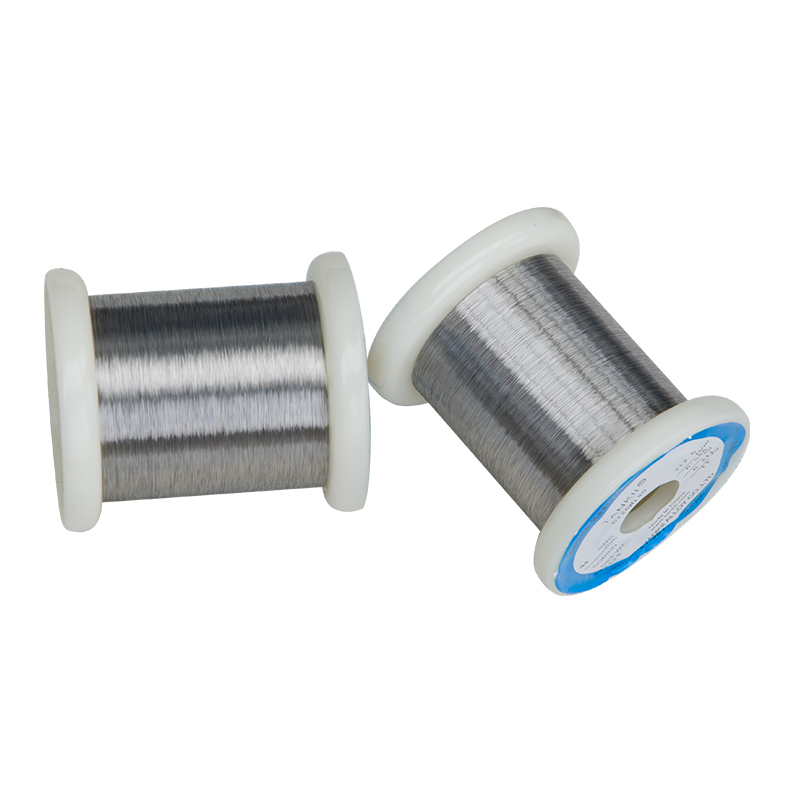
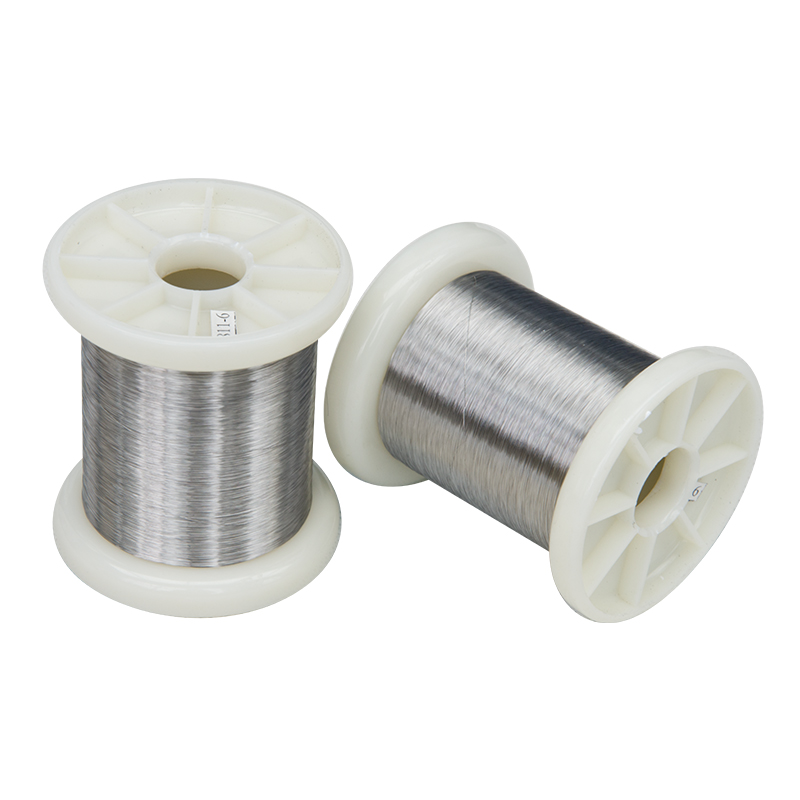
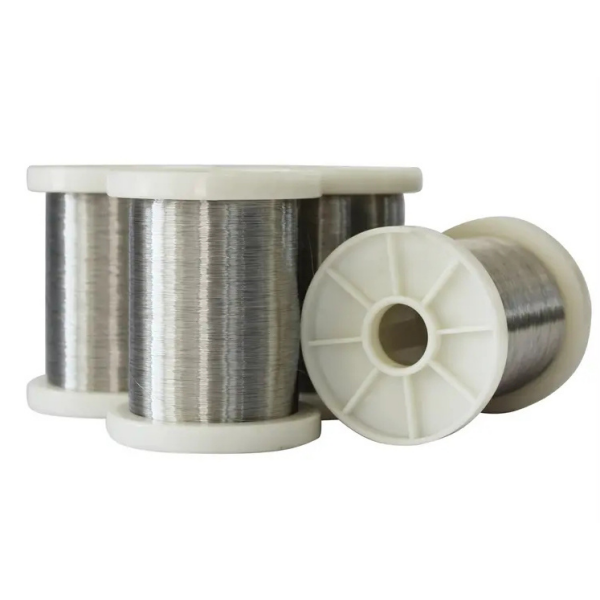
Chromel Alumel type K Thermocouple Wire T C wire KP KN
Diameter 0.2mm type K Thermocouple Wire T C wire KP KN (Type K / N)
Thermocouple wire allows temperatures to be measured electronically.
A typical thermocouple construction consists of a pair of dissimilar metals that are electrically joined together at the sensing point and connected to a voltage measuring instrument at the other end.
When one junction is hotter than the other, a thermal “electromotive” force (in millivolts) is produced that is roughly proportional to the difference in temperature between the hot and cold junctions.
NiCr-Ni (Type K) thermocouple wire finds the widest use in all basemetal thermocouple, at temperature above 500 °C.
Type K thermocouple wire has strong resistance to oxidation than other base metal thermocouples. It has high EMF against Platinum 67, excellent temperature accuracy, sensitivity and stability, with a low cost. It is recommended for oxidizing or inert atmospheres, but cannot be used directly in the following cases:
(1) Alternatively oxidizing and reducing atmosphere.
(2) Atmosphere with sulphur gases.
(3) Long time in vacuum.
(4) Low oxidizing atmosphere such as hydrogen and carbon monoxide atmosphere.
Detailed Parameter
|
Chemical Composition for thermocouple wire
|
|||||
| Conductor Name | Polarity | Code | Nominal Chemical Composition /% | ||
| Ni | Cr | Si | |||
| Ni-Cr | Positive | KP | 90 | 10 | – |
| Ni- Si | Negative | KN | 97 | – | 3 |
|
Working Temperature
of thermocouple wire |
||
| Diameter/mm | Long time Working temperature /ºC | Short period Working temperature /ºC |
| 0.3 | 700 | 800 |
| 0.5 | 800 | 900 |
| 0.8,1.0 | 900 | 1000 |
| 1.2,1.6 | 1000 | 1100 |
| 2.0,2.5 | 1100 | 1200 |
| 3.2 | 1200 | 1300 |
Application of thermocouple wire:
1. Heating – Gas burners for ovens
2. Cooling – Freezers
3. Engine protection – Temperatures and surface temperatures
4. High temperature control – Iron casting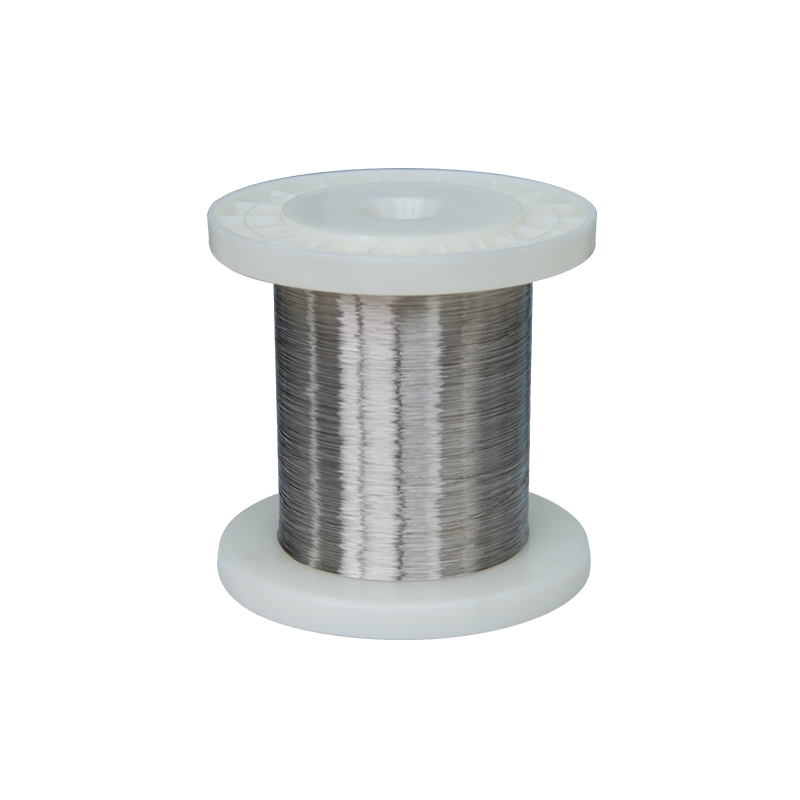

Products categories
-
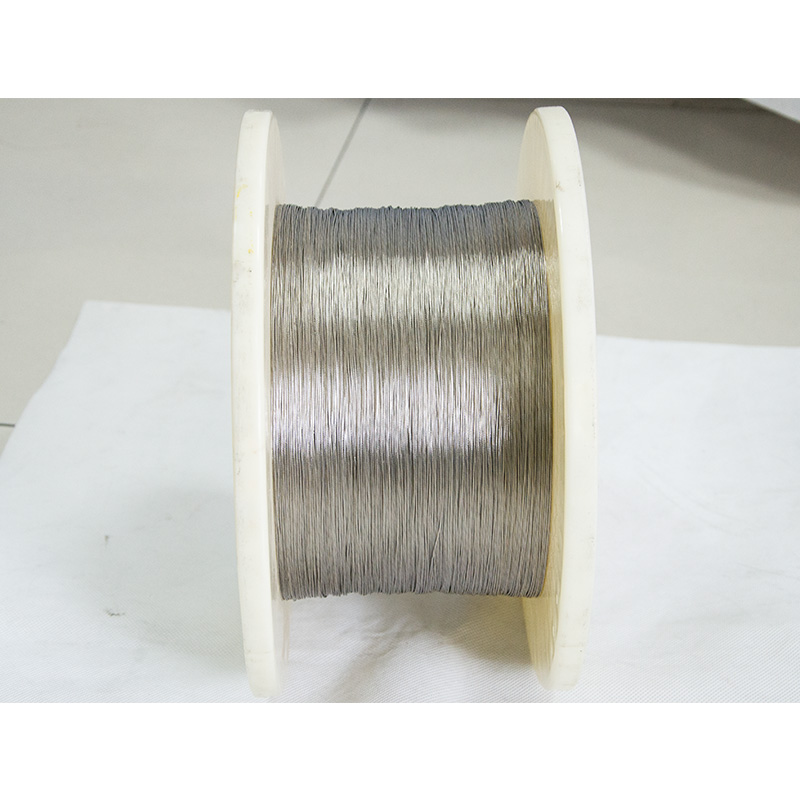
Nichrome stranded Wire Ni80 Nichrome Heating Wi...
-
Low Resisitance Nickel Copper Alloy Wire (CuNi15)
-

Manufacture 20AWG PFA FEP Insulated Resistance ...
-
0.1-8.5mm Diameter Cusn6 Hard Drawn Phosphor Br...
-

ERNiFeCr-1 Welding Wire (UNS N08065) – Nickel-I...
-

955MXC Thermal Spray Wire | Ni-Based Self-Fluxi...
-

E-mail
-

Whatsapp