


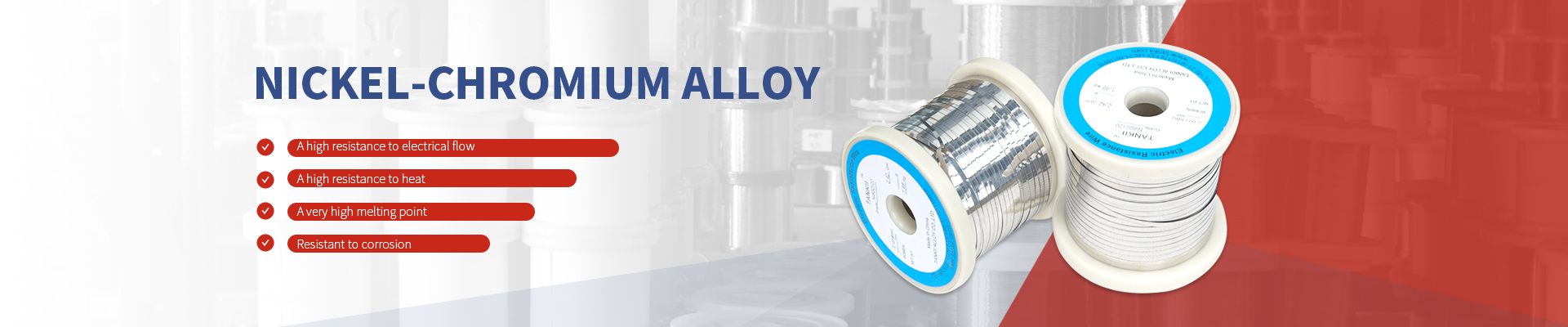

Choosing between Nichrome 80/20 and FeCrAl A1 is not simply a matter of selecting the alloy with the highest temperature rating. The better choice depends on the operating temperature, duty cycle, atmosphere, element geometry, maintenance plan and acceptable lifecycle cost. Nichrome 80/20 is widely used for domestic appliances, industrial heaters and wire-wound resistors, while FeCrAl A1 is often preferred when continuous high-temperature operation, oxidation resistance and shape stability are the main priorities.
This guide compares Ni80Cr20 nickel-chromium alloy with FeCrAl A1, referred to as Peer A1 in the supplied comparison material. It explains the practical differences in temperature capability, protective oxide formation, creep resistance, electrical stability and total cost so that engineers and purchasing teams can shortlist the right resistance heating material for a specific design.
For a product-level review, see the Ni80Cr20 heating element material page and the FeCrAl A1 heat-resistant wire page. The broader resistance alloy product range can help when the application may require another wire, strip, rod or formed heating component.
Key takeaway: Nichrome 80/20 is often a practical choice for low- to medium-temperature or intermittent heating where material cost and easy forming are important. FeCrAl A1 becomes more attractive as temperature, continuous operating time, oxidation exposure and maintenance cost increase. Final selection should be checked against the actual element design and furnace atmosphere.

Nichrome 80/20 vs. FeCrAl A1: Core Specification Overview
The table below gives a practical baseline comparison. Values described as approximate should not replace a project-specific datasheet, because maximum service temperature depends on wire or strip size, element loading, support conditions, heating and cooling cycles, and the surrounding atmosphere. The FeCrAl A1 product information published by TANKII also indicates that service temperature can vary with diameter and grade condition.
| Parameter | Nichrome 80/20 (Ni80Cr20) | FeCrAl A1 | Why it matters |
|---|---|---|---|
| Alloy system | Nickel-chromium | Iron-chromium-aluminum | Controls oxidation behavior, mechanical response and material cost. |
| Approximate continuous service temperature | Up to about 1200°C, depending on design conditions | Up to about 1400°C for applicable A1 sizes and conditions | Higher temperature capability can reduce the need for frequent element replacement. |
| Resistivity at 20°C | Approximately 1.09 μΩ·m | Approximately 1.45 μΩ·m | Affects required element length, cross-section and electrical loading. |
| Density | Approximately 8.4 g/cm³ | Approximately 7.1 g/cm³ | Influences element mass and can affect material consumption for a given design. |
| Room-temperature magnetic behavior | Generally non-magnetic | Magnetic at room temperature | Relevant where magnetic response affects handling, sensing or equipment layout. |
Temperature Capability and Expected Service Life
Temperature rating is usually the first screening criterion for a resistance heating alloy. TANKII’s Ni80Cr20 product information describes 80/20 nickel-chromium resistance material as suitable for operating temperatures up to approximately 1200°C and highlights its oxidation resistance during frequent switching or wide temperature changes. This makes Nichrome 80/20 a strong candidate for many domestic appliances, industrial heaters and other applications that remain within its practical temperature range.
FeCrAl A1 is generally selected when the element must operate at a higher temperature for long periods. The published A1 product information lists a maximum continuous service temperature that varies with diameter and reaches approximately 1400°C for applicable larger-diameter conditions. In a properly designed industrial furnace, this additional temperature margin may support higher process temperatures and help reduce replacement frequency. It should not, however, be treated as a universal service-life guarantee: actual life also depends on surface loading, thermal cycling, support spacing, atmosphere and contamination.
The supplied comparison material indicates that FeCrAl A1 can deliver two to three times the service life of Nichrome 80/20 in some industrial furnace conditions above 1100°C. This is a useful design hypothesis rather than a fixed rating. Buyers should request test conditions or field data that match their own element geometry and operating cycle before converting that comparison into a maintenance or cost forecast.
Oxidation Resistance: Cr₂O₃ Versus Al₂O₃ Protection
Both alloys rely on a protective oxide layer to slow further oxidation, but the oxide-forming elements are different. Nichrome 80/20 forms a chromium oxide, or Cr₂O₃, layer during heating. Within an appropriate operating range, this layer helps protect the underlying nickel-chromium alloy and supports reliable performance during repeated heating cycles.
FeCrAl A1 forms an aluminum oxide, or Al₂O₃, layer. Alumina is highly stable at elevated temperature and can provide a durable barrier against inward oxygen diffusion when the alloy is used under suitable conditions. This is a major reason FeCrAl grades are frequently considered for high-temperature furnace elements. The protective film is not a substitute for correct installation: mechanical abrasion, corrosive contaminants, unsuitable atmospheres and repeated thermal shock can still shorten element life.

Creep Strength, Sagging and Element Stability
A heating element can fail even when its electrical resistance is initially correct. At elevated temperature, long-term mechanical deformation may cause a coil to sag, touch adjacent turns or lose its intended spacing. The result can be local overheating, short-circuiting or uneven temperature distribution across the furnace.
Nichrome 80/20 may require closer attention to support spacing and coil geometry when it is operated near the upper end of its temperature range for extended periods. A design may need denser supports, a conservative surface load or a smaller coil pitch to maintain shape. These decisions should be made together with the element manufacturer rather than based on alloy name alone.
FeCrAl A1 is commonly favored for high-temperature elements because it offers stronger resistance to creep and sagging under demanding conditions. Better shape retention may allow more flexible support design and more stable spacing over time. The final result still depends on wire diameter, strip thickness, mounting orientation, thermal load and furnace construction.
Electrical Resistance Stability and Temperature Control
Resistance stability affects heater power, controller tuning and temperature repeatability. Nichrome 80/20 provides a useful balance of resistivity, oxidation resistance and formability, but resistance can drift as the element ages through oxidation, material loss and repeated high-temperature cycling. The practical effect may be gradual power reduction or a change in the relationship between controller output and actual temperature.
FeCrAl A1 combines higher initial resistivity with a stable alumina-forming surface. The supplied comparison material describes lower resistance change across the operating range and lower long-term drift after the protective film has stabilized. For equipment that must hold a narrow process temperature or run continuously, this stability can be valuable. Engineers should still confirm the resistance-temperature curve and controller requirements for the selected grade and finished element.
Upfront Price Versus Lifecycle Cost
Nichrome 80/20 is often attractive when the project has a lower or medium operating temperature, intermittent duty and a strong focus on initial procurement cost. Nickel content means its material price can be affected by nickel market conditions, so the final quotation should be evaluated at the time of purchase rather than assumed from a fixed historical price.
FeCrAl A1 may have a higher or different upfront cost depending on specification and supply conditions, but a longer service interval can reduce replacement material, labor, furnace cooldown and production interruption. For continuous service above approximately 1100°C, a lifecycle comparison may therefore favor FeCrAl A1 even when its initial purchase price is not the lowest. A sound calculation should include element mass, power demand, expected operating hours, replacement labor and the cost of unplanned downtime.
Which Alloy Should You Select?
Use the following screening guide as a starting point. It is not a substitute for a thermal calculation or a supplier review of the finished element.
- Choose Nichrome 80/20 for consideration when the operating temperature is below approximately 1000°C, the duty cycle is intermittent, rapid switching is important and initial material cost is a major constraint.
- Choose FeCrAl A1 for consideration when the element must operate continuously at a higher temperature, especially near or above 1100°C, and long service life or reduced maintenance is more important than the lowest initial cost.
- Review FeCrAl A1 carefully for high-temperature ovens, industrial furnaces and applications where oxidation exposure and element sagging are recurring failure concerns.
- Review the complete assembly before ordering: voltage, wattage, target temperature, wire or strip dimensions, coil geometry, support method, atmosphere, thermal cycling and required tolerances can change the best material choice.
| Project condition | Initial alloy to evaluate | Important confirmation |
|---|---|---|
| Below 1000°C and intermittent operation | Nichrome 80/20 | Power requirement, switching frequency and target element life. |
| Continuous service from approximately 1000–1200°C | Compare both; FeCrAl A1 may offer a longer service interval | Element loading, support spacing and lifecycle cost. |
| Above approximately 1200°C or severe long-term oxidation exposure | FeCrAl A1, subject to grade and geometry confirmation | Diameter, atmosphere, surface load and supplier test data. |
| Mass-produced household or commercial heater with cost control priority | Nichrome 80/20 may be suitable for the specified temperature range | Required temperature, cycle life and forming requirements. |
Final selection checklist: There is no universally better heating alloy. Nichrome 80/20 offers a well-established solution for many low- and medium-temperature heating systems, while FeCrAl A1 provides a stronger starting point for higher-temperature, continuous-duty designs where oxidation resistance, creep strength and maintenance intervals matter. The correct decision comes from matching the alloy to the complete operating envelope rather than comparing price per kilogram alone.
- Define the actual element temperature, not only the chamber set point.
- Confirm voltage, wattage, resistance, wire or strip dimensions and element geometry.
- Describe the atmosphere, contaminants, ventilation and thermal cycling pattern.
- Compare expected replacement intervals and downtime with the initial material quotation.
- Request grade-specific data and finished-element recommendations before final production.
Need Help Selecting a Heating Alloy?
Share your target temperature, duty cycle, electrical requirements, element dimensions and working atmosphere with the TANKII team. We can review whether Nichrome 80/20, FeCrAl A1 or another resistance alloy is the better starting point for your application.
Post time: Nov-26-2026

