


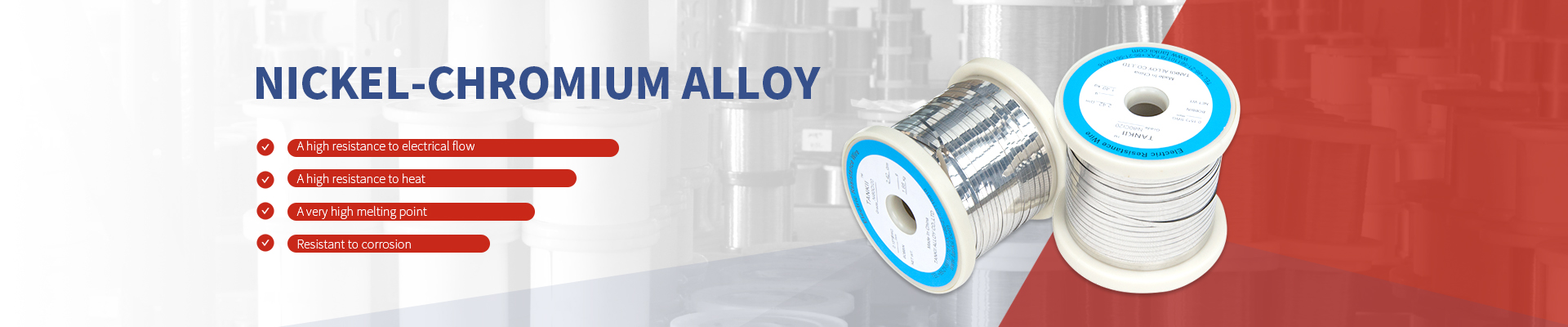

Karma wire is a high-performance nickel-chromium-aluminum-iron alloy wire, widely used as the core material for precision resistors and measurement instruments.
Its excellent resistivity, low temperature coefficient of resistance (TCR), and stable performance make it irreplaceable in the precision industry. This guide helps professionals in the precision resistor and measurement instrument field choose the right Karma wire for their projects.
1. Why Karma Wire Is Essential for Precision Resistors & Measurement Instruments
1.1 Core Advantages for Precision Applications
Karma wire stands out in the precision industry due to its unique properties:
- High resistivity (1.33 μΩ·m at 20℃), 2-3 times higher than manganin, enabling compact resistor designs.
- Extremely low TCR (±20 ppm/℃), ensuring stable resistance values in temperature fluctuations.
- Low thermal EMF vs. copper (≤2.5 μV/℃), reducing measurement errors in precision instruments.
1.2 Key Role in Critical Scenarios
It is the preferred material for high-precision wire-wound resistors, strain gauges, and measurement sensors.
Its stability directly determines the accuracy and reliability of instruments in aerospace, medical, and industrial measurement fields.
2. Key Factors to Consider When Choosing Karma Wire
2.1 Chemical Composition & Grade
The standard grade for precision applications is Karma 6J22, with a strictly controlled composition:
- Nickel (Ni): Balance (around 75%), Chromium (Cr): 19-21%, Aluminum (Al): 2.5-3.2%, Iron (Fe): 2.0-3.0%.
Trace elements (Si, Mn, C) are limited to ≤0.5% to ensure stable performance.
2.2 Wire Diameter & Tolerance
Diameter directly affects resistance accuracy and processing feasibility:
- For precision resistors: 0.018mm-0.10mm (small diameter for compact designs).
- For measurement sensors: 0.10mm-0.50mm (balance of flexibility and stability).
Tolerance should be ≤±0.003mm for critical applications to avoid resistance deviations.
2.3 Surface Treatment
Two common surface treatments are available for different needs:
- Bright surface: Precision-polished, ideal for applications requiring solderability and aesthetic appearance.
- Oxidized surface: Dense protective film, enhancing anti-oxidation and long-term stability at high temperatures.
2.4 Temperature Adaptability
Choose based on the working temperature of your instruments:
- Static applications: Up to 400℃, suitable for standard precision resistors.
- Dynamic applications: Up to 800℃, ideal for high-temperature measurement sensors.
3. Karma Wire vs. Similar Alloy Wires: Comparison for Precision Industry
The table below helps you distinguish Karma wire from constantan (common alternative) for precision applications:
| Performance Parameter | Karma Wire | Constantan Wire |
| Resistivity (20℃) | 1.33 μΩ·m | 0.49 μΩ·m |
| Temperature Coefficient of Resistance (TCR) | ±20 ppm/℃ | ±20 ppm/℃ |
| Max Operating Temperature | 800℃ (dynamic), 400℃ (static) | 450℃ |
| Thermal EMF vs. Copper | ≤2.5 μV/℃ | Higher (more measurement error) |
| Suitable Applications | High-precision resistors, strain gauges, low-temperature/high-fluctuation measurement | General precision resistors, static strain measurement |
4. Step-by-Step Guide to Choose Karma Wire for Your Project
Step 1: Clarify Application Requirements
Define the instrument type (precision resistor, strain gauge, sensor) and working environment (temperature, humidity).
For example, strain gauges in low-temperature environments (-269℃ to 300℃) prioritize Karma wire for its temperature stability.
Step 2: Determine Specifications
Select diameter, tolerance, and grade based on resistance value and installation space.
For micro-precision resistors, choose 0.02mm-0.05mm diameter with ±0.001mm tolerance.
Step 3: Choose Surface Treatment
Opt for bright surface if soldering is required; choose oxidized surface for high-temperature or long-term use.
For strain gauges, naked solder pads (SP) are recommended for flexibility, while tinned dots (SD) ease soldering.
Step 4: Verify Quality & Standards
Ensure the wire complies with ASTM B267 and JB/T 5328 standards for consistent performance.
Check for 100% pre-delivery testing (resistivity, TCR, diameter tolerance) to avoid quality issues.
5. Our Karma Wire: Tailored for Precision Resistors & Measurement Instruments
5.1 Complete Specifications
We offer Karma 6J22 wire with diameters from 0.018mm to 1.50mm, matching all precision industry needs.
Tolerance options range from ±0.001mm to ±0.03mm, ensuring high resistance accuracy.
5.2 Customized Solutions
Provide customized surface treatment (bright/oxidized) and cut lengths for specific instrument designs.
Tailor alloy composition slightly for self-temperature compensation (S-T-C) to match test material expansion coefficients.
5.3 Strict Quality Control
Vacuum-melted production ensures high purity (>99.5%) and uniform performance.
100% pre-delivery testing includes resistivity, TCR, thermal EMF, and diameter checks to meet precision industry standards.
6. Conclusion
Choosing the right Karma wire is critical for the accuracy and reliability of precision resistors and measurement instruments.
By focusing on composition, diameter, surface treatment, and temperature adaptability, you can select the optimal wire for your project.
Our high-quality Karma wire, tailored for the precision industry, provides stable and reliable solutions. Contact us for personalized recommendations based on your specific instrument requirements.
Post time: Apr-21-2026

