








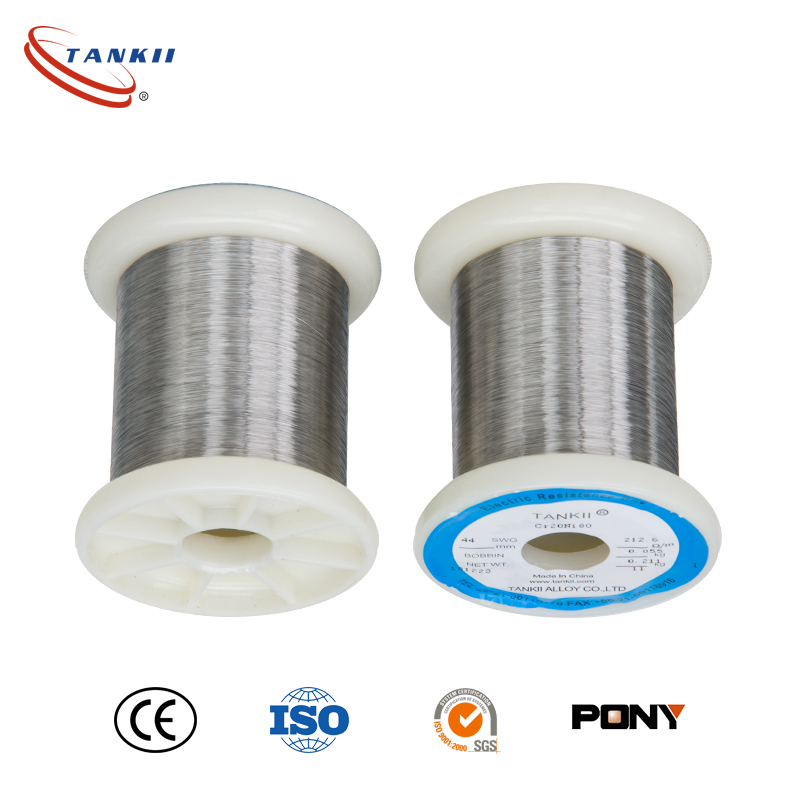
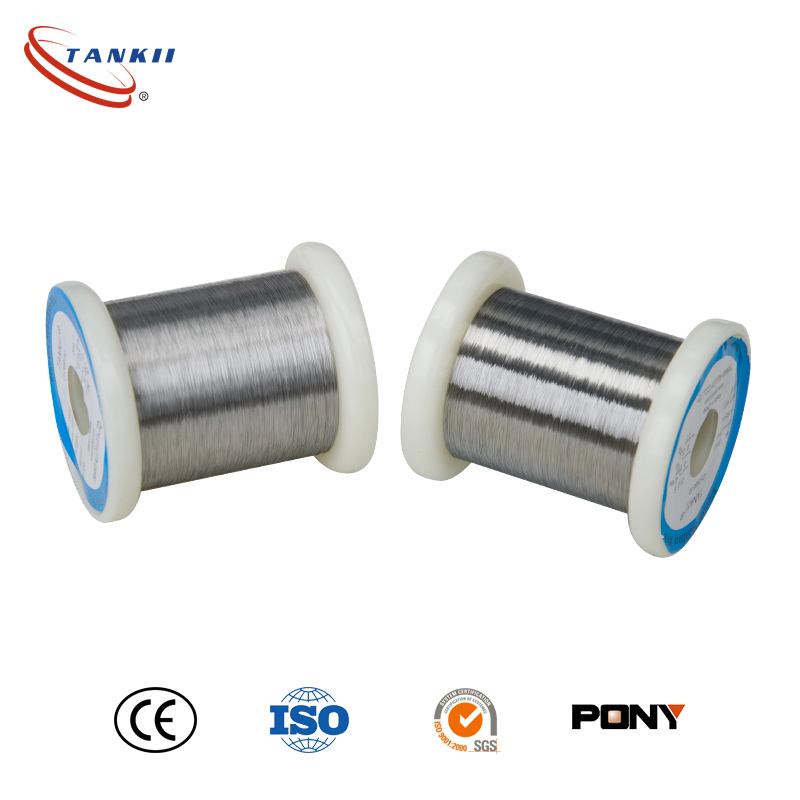
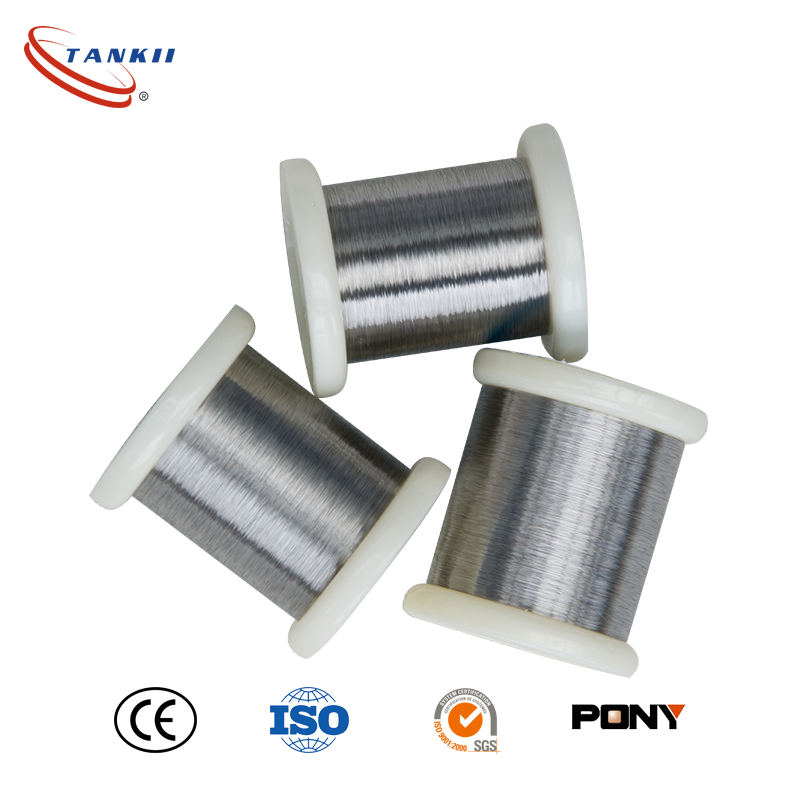
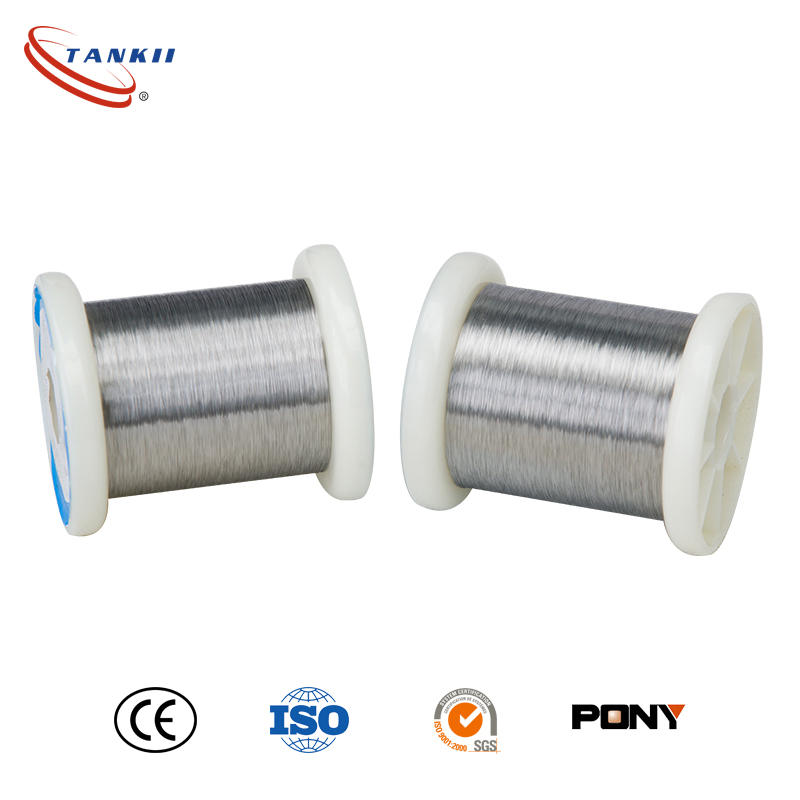
Nickel 212 Wire/ Pure Nickel Resistance Wire
Nickel 212 Wire/ Pure Nickel Resistance Wire
Chemical Content, %
| Ni | Mn | Si |
| Bal. | 1.5~2.5 | 0.1max |

Mechanical Properties
| Resisivity at 20ºC | 11.5 microhm cm |
| Density | 8.81 g/cm3 |
| Thermal Conductivity at 100ºC | 41 Wm-1 ºC-1 |
| Linear Expansion Coefficient(20~100ºC) | 13×10-6/ ºC |
| Melting Point(Approx.) | 1435ºC/2615ºF |
| Tensile Strength | 390~930 N/mm2 |
| Elongation | Min 20% |
| Temperature Coefficient of Resistance(Km, 20~100ºC) | 4500 x 10-6 ºC |
| Specific Heat(20ºC) | 460 J Kg-1 ºC-1 |
| Yield Point | 160 N/mm2 |
Usage
The nickel-based electric vacuum material produced by TANKII has below advantages: excellent electrical conductivity, weldability (welding, brazing), can be electroplated, and a suitable linear expansion coefficient of the alloy inclusions, volatile elements and gases content is low. Processing performance, surface quality, corrosion resistance, and can be used to make the anode, spacers, electrode holder, etc., but also can lead filament bulbs, fuses.
The nickel-based electric vacuum material produced by TANKII has below advantages: excellent electrical conductivity, weldability (welding, brazing), can be electroplated, and a suitable linear expansion coefficient of the alloy inclusions, volatile elements and gases content is low. Processing performance, surface quality, corrosion resistance, and can be used to make the anode, spacers, electrode holder, etc., but also can lead filament bulbs, fuses.
Features
The company electrode material (conductive material) having a low resistivity, high temperature strength, the smaller the arc melting under the action of evaporation and so on.
The addition of Mn to pure Nickel brings much improved resistance to Sulphur attack at elevated temperatures and improves strength and hardness, without appreciable reduction of ductility.
Nickel 212 is used as a support wire in incandescent lamps and for electrical resistor terminations.
The data provided in this document is protected under applicable laws, including but not limited to copyright law and international agreements.

Write your message here and send it to us
Products categories
-
Tankii Cuprothal 15/CuNi10 bright fine Electric...
-
Chinese Standard K type thermocouple Green and ...
-
CuNi40 CuNi44 Copper Nickel Alloy Precision All...
-
Manufacturer 7X0.211mm Type K/J Fiberglass Insu...
-

Tankii 0.19*25mm 6J13 Manganin Alloy Strip Ultr...
-

Factory Direct Enameled Wire Manganese Copper 6...
-

E-mail
-

Whatsapp